Luciana Jury | Globe Business Urges Industry to Co-Create the Philippines’ Digital Backbone
The Philippines stands at a defining moment in its digital evolution. As demand for speed, reliability, and reach accelerates, it’s becoming clear that traditional infrastructure models are no longer enough. The nation’s ambition to become a regional hub for connectivity, cloud, and content is not in question; the challenge lies in coordination.
Today, networks that should be uniting people and businesses are often built in silos. But the future won’t be won through isolated runs. It will be shaped by ecosystems that collaborate, scale, and innovate together.
Co-Creating Infrastructure at the Globe Business G Summit
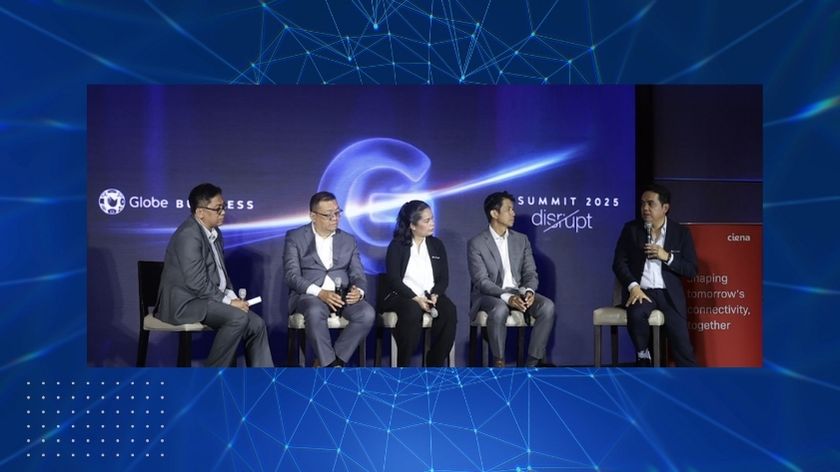
This call for shared infrastructure was the central theme of a breakout session at the 2025 Globe Business G Summit. The session, “Unlocking Powerful Connections to Fuel the Future of Philippine Infrastructure,” brought together industry leaders to rethink how the country builds for scale.
The vision: a Philippines where fiber grids, data centers, and cable systems don’t compete for space but work in sync to serve the nation.
Globe Business’s Wholesale Division, led by Vice President Cocoy Claravall, shared how this vision is already in motion from new Festoon loops in Luzon, to expanded subsea capacity through the Philippine Domestic Submarine Cable Network (PDSCN) and the Asia Link Cable.
At the center of the roadmap is the Managed Optical Fiber Network (MOFN), a model that allows hyperscalers and carriers to customize connections without sacrificing the benefits of managed services. Complementing this is ProAssure, a proactive platform designed to detect and resolve issues before they impact customers.
“Our role has expanded. We’re no longer just connecting endpoints anymore,” said Claravall. “We’re enabling ecosystems from subsea to cloud, from enterprise to end user. And that means building infrastructure that’s flexible and future-ready.”
Technology, Balance, and Scalability
Adding a technical perspective, Kian Soon Wong, Ciena’s Head of Sales Engineering for ASEAN, explained how MOFN and Managed Spectrum give customers agility beyond fixed contracts.
The model allows clients to:
- Select their own equipment
- Monitor network health in real-time
- Scale capacity as demand shifts
All while Globe manages the heavy lifting of deployment and maintenance.
“MOFN is about balance,” Wong noted. “It gives customers control without the operational burden, and gives operators like Globe a way to deliver more agile services. It’s a collaboration model, not just a tech solution.”
A Growing Hyperscale Destination
From the data center perspective, STT GDC Philippines CEO Carlo Malana highlighted how the country is gaining traction as a destination for hyperscale deployments. With its Cavite and Fairview campuses, STT GDC is paving the way for AI and cloud workloads to be hosted in-country.
“The runway is long and the momentum is building,” Malana said. “Philippine infrastructure is no longer aspirational; it’s operational. The question now is how we scale that responsibly and fast enough to meet demand.”
From Connectivity to Co-Creation
For Globe, the role of a telco goes beyond connecting people, it’s about co-creating the backbone of the digital economy.
“Infrastructure is more than physical assets, it’s about trust, alignment, and the will to build beyond our individual interests,” said KD Dizon, Head of Globe Business. “If we want real digital progress in the Philippines, we need to co-create the grid that will carry it.”
The session closed with a Disruptor Dialogue featuring Claravall, Wong, Malana, and Globe’s Janice Ortega, where they discussed what it will take for the Philippines to compete in a world powered by AI and real-time applications. Their conclusion: success will require seamless interconnection, policy alignment, and shared investment across multiple players.
The Path Forward
The message from the summit was unmistakable: infrastructure is no longer a one-player game. The Philippines must approach its digital future as a shared national grid, built through cooperation and a unified vision.
With the right coordination, the Philippines is not just ready to keep pace, it’s ready to lead.